The Supreme Court Takes Up Skinny Labels: What Hikma v. Amarin Is Really About
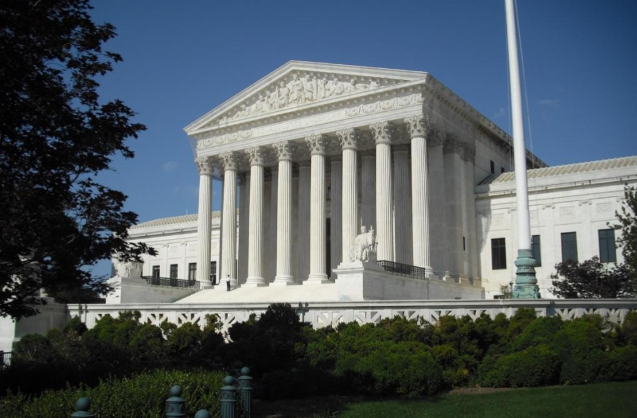
The U.S. Supreme Court has agreed to hear Hikma Pharmaceuticals USA, Inc. v. Amarin Pharma, Inc. (No. 24-889), a closely watched patent case that sits at the intersection of pharmaceutical regulation, patent law, and generic drug competition. Essentially, the case asks how far patent protection extends when a branded drug has multiple approved uses and a generic manufacturer seeks approval for only some, but not all, of those uses. Although the Supreme Court has not yet issued a final decision, its eventual ruling could significantly affect how generic drugs are approved, marketed, and litigated, particularly when so-called “skinny labels” are involved.
What Is a “Skinny Label”?
Under the Hatch-Waxman Act, generic drug manufacturers are allowed to seek FDA approval for versions of branded drugs without infringing valid patents that still cover certain uses of the drug. One way they do this is through a “skinny label,” also known as a “carve-out label.”
A skinny label removes from the generic drug’s FDA-approved labeling any uses that are still protected by patents, while retaining uses that are no longer patented or were never patented in the first place. This system is designed to strike a balance: it preserves incentives for innovation by protecting patented uses, while also allowing lower-cost generics to enter the market sooner for non-patented uses. For decades, skinny labels have been a key mechanism enabling generic competition.
The Drug at the Center of the Dispute: Vascepa®
Amarin markets a drug called Vascepa®, which has two FDA-approved uses: 1) Treating severe hypertriglyceridemia, which is not covered by any remaining patents, and 2) Reducing cardiovascular risk, which is protected by Amarin’s method-of-use patents.
Hikma, a generic drug manufacturer, sought FDA approval for its own version of the drug. To avoid infringing Amarin’s patents, Hikma obtained approval using a skinny label that included only the non-patented use and expressly carved out the patented cardiovascular indication. On paper, Hikma followed the established regulatory framework. The dispute arose over what happened next.
The Legal Dispute and the Lower Courts’ Rulings
Amarin did not argue that Hikma’s FDA-approved label itself infringes its two patents. Instead, the dispute centers on whether Hikma induced patent infringement through its conduct outside the label. Amarin claims that Hikma’s marketing materials and public statements, including describing its product as a “generic version” of Vascepa®, encouraged doctors and pharmacists to use the drug for Vascepa’s patented cardiovascular indication, even though that use was carved out of Hikma’s label.
Hikma responded that it followed the Hatch-Waxman framework exactly as intended. It obtained FDA approval using a skinny label that expressly excluded the patented use, and it argues that general marketing statements that do not mention the patented indication should not expose a generic manufacturer to infringement liability. According to Hikma, allowing such claims would effectively nullify the skinny-label pathway by making compliance with FDA labeling requirements insufficient protection.
The federal district court initially sided with Hikma and dismissed Amarin’s complaint, finding that Amarin failed to plausibly allege inducement of infringement. The court emphasized Hikma’s adherence to the FDA-approved skinny label and concluded that the alleged marketing conduct did not rise to the level of active encouragement required under patent law for a finding of induced infringement.
On appeal, however, the U.S. Court of Appeals for the Federal Circuit reversed that decision. The Federal Circuit held that inducement analysis is not limited to the FDA label alone and that a court may consider the totality of the generic manufacturer’s conduct, including marketing statements and public communications. At the pleading stage, the court concluded that Amarin had alleged enough to proceed, setting up the legal conflict that the Supreme Court has now agreed to resolve.
The Two Key Questions Before the Supreme Court
The Supreme Court agreed to hear the case to clarify the law, and its decision is expected to address two central questions:
First, can a generic drug manufacturer be held liable for inducing patent infringement when its FDA-approved label carves out the patented use, but its other statements (e.g., marketing) allegedly encourage use of the drug for that patented purpose?
Second, what level of intent and encouragement must be alleged to state a valid claim for induced infringement in the skinny-label context? In other words, is it enough to point to general marketing statements, or must a patent holder show more direct and explicit promotion of the patented use?
Why the Supreme Court’s Decision Matters
Although the Supreme Court has not yet ruled on the merits, Hikma v. Amarin already carries significant implications for the pharmaceutical and life sciences industries. At stake is how far patent liability can extend when a generic drug complies with FDA labeling requirements but is accused of encouraging use of a patented indication through marketing or other public statements.
For generic drug manufacturers, the case raises the possibility that regulatory compliance alone may not be enough to avoid infringement claims. If courts allow inducement liability based on conduct outside the FDA-approved label, generic companies may need to significantly limit how they describe their products, increasing legal risk and uncertainty around skinny-label strategies.
For brand-name pharmaceutical companies, the case could strengthen the practical value of method-of-use patents. A ruling that permits inducement claims based on marketing behavior may provide innovators with additional tools to challenge generic entry, even where a carve-out label is in place.
More broadly, the case tests the balance Congress sought to strike under the Hatch-Waxman Act between encouraging innovation and promoting competition. A decision favoring Amarin could make skinny labels harder to use and delay generic competition, potentially keeping drug prices higher. A decision favoring Hikma, on the other hand, could reinforce the predictability of the skinny-label pathway, but limit how patent holders enforce method-of-use patents.
If you’re interested in learning more about this case or how its outcome may impact your business don’t hesitate to contact us at info@patentxl.com or at +1 (610) 871-2024)